Monday, October 25, 2010

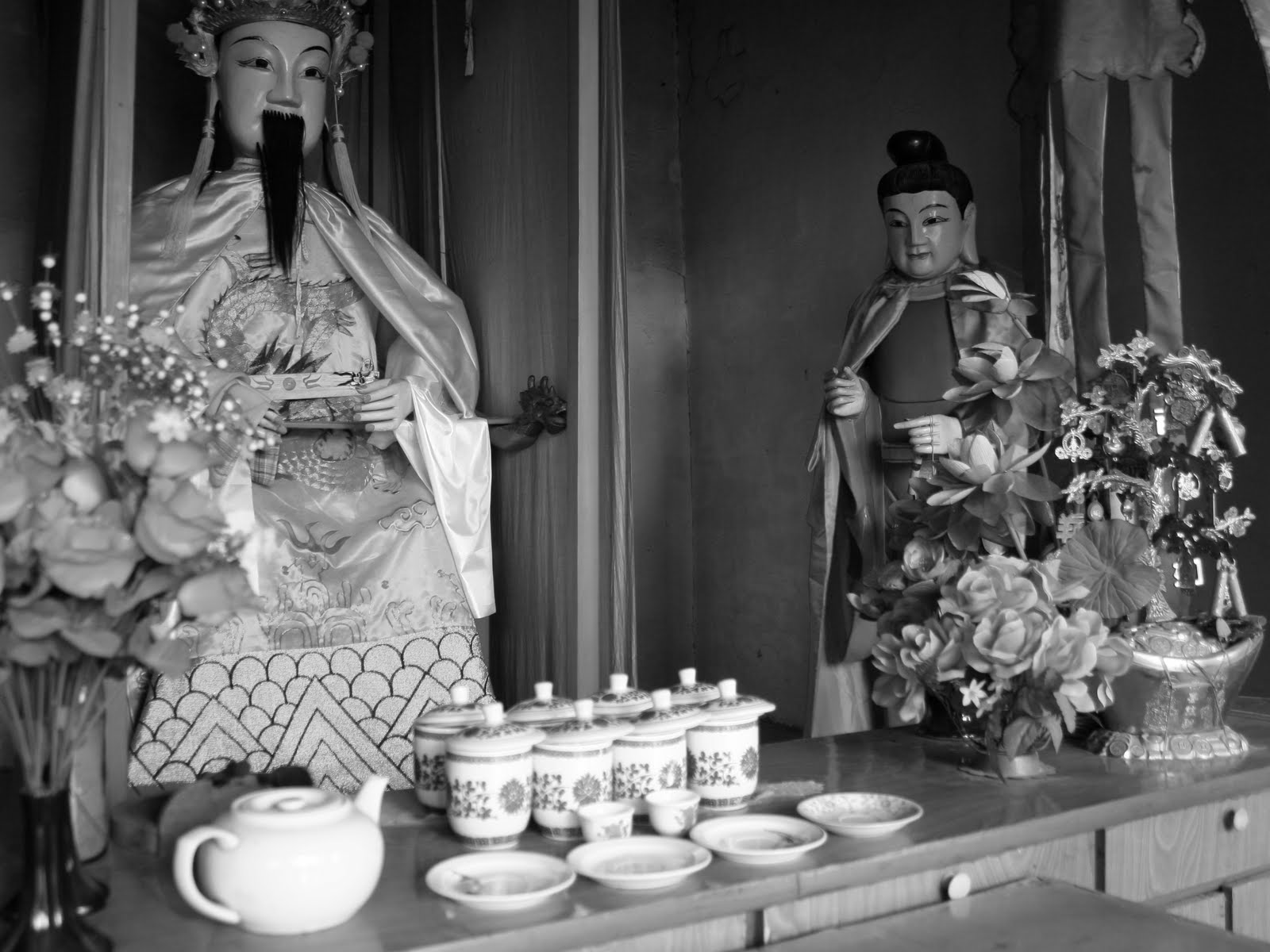
fuciao cun temple

temple and bridge at fuciao cun village. Dec 2009 - June 2010




Wednesday, October 20, 2010

Nanjing House


China International Exhibition of Architecture, House 4. designed by the author.

Monday, October 11, 2010

GARDENS IN TIME: A REVIEW


NOTES ON THE MAKE-DO GARDEN

GARDENS AS CULTURAL MEMORY IN SUZHOU


Stanislaus Fung and Yingong Xu are amongst the first generation of scholars educated both in China and abroad. Both are currently at the University of New South Wales, Sydney. Their critical essays on the Chinese Garden often focus on conceptions of time, and how they differ from that of in the West. In Notes on the Make-do Garden, Fung positions the garden as neither an embodiment of a glorified past nor idealistic future. Xu approaches questions of restoration, and how the act of garden making and re-making is to adapt and develop a living narrative intrinsic to the site. Both authors demonstrate the garden as a form of place- making that is able to positions its owner relative to dual temporal realities; society of the day and the values that transcend generations. As Suzhou and China race towards a future where the only certainty is a total departure from the past, where the fragmented suburban landscape is mute to any collective identity, the Garden as described by Fung and Xu appears as an endeavor capable of projecting a cultural identity in relation to living past.


The Make-Do Garden is a fictitious garden created in text by Huang Zhouxing (1611-1680). Huang's essay, "Record of the Make-do Garden," is written in 1674, and participates in a larger interest, particular to the seventeenth century, in imaginary gardens as a vehicle for literary investigation (Stanislaus, 1)

Stanislaus Fung provides a translation to the opening of Huang's Record:

Since antiquity, gardens have been remembered on account of people, and people have also been remembered on account of gardens. Nowadays there are many owners of gardens in the world. How could Huang Jiuyan not have a garden? Indeed, Jiuyan proudly told a guest, "My garden has no fixed location. I merely select the place where the landscape is finest under the Four Heavens, and construct it there. What is called 'the finest place' is in the world, yet out of this world, is not in the world, yet not out of this world. Since I have searched for it from the day I was born, and have only found it after several tens of years, I have not been inclined to speak of it to men of the world." The guests said, "Please describe its general features." Jiuyan replied, "Certainly."

Huang proceeds by describing the landscape of the fictive garden, two accounts of its land and water dominated halves respectively, and concludes by relating the two halves, like ying and yang, with each other. His garden is encircled by an impenetrable ring of mountains. The only opening is through a cave, no larger then the human body, and screened at its entrance by a waterfall. Thus it is isolated from the rest of humanity. It is both of this world and set apart from it.

Fung notes that the layout of the garden is the inverse of a well known fourth century poem "Record of the Peach Blossom Source" (桃花运) by Tao Yuanming (365-427AD). In Tao's poem, a fisherman stumbles upon a peaceful peoples who know no strife. They live in peace amongst peach blossoms and isolated from the society since the beginning of Imperial China under the Qin (221-208 BC). The fisherman leaves but is never able to find the ford back to the Peach Blossoms.

Even in its name, the Make-do Garden suggests temporal transience. Stanislaus Fung presents the imaginary garden as a device that positions its author and viewers neither entirely in the present nor the past. The Make-do Garden is neither entirely Tao's Peach Blossom Grove, nor locked its ring mountains and physical reality. The garden is neither nostalgic nor an idealized future, Arcadia nor Utopia. It is not "insulated" within the flow of time. Its identity lies between multiple histories.


Tuesday, May 11, 2010

1000 boats stalled on Grand Canal

http://www.chinadaily.com.cn/photo/2010-05/11/content_9832767.htm

Tuesday, April 27, 2010

Fuciao Village, Suzhou


1. looking east. connecting with the Grand Canal
2. Looking west towards Dushu Lake

3. looking north. Fuciao Temple. last remnant of Fuciao Cun village

I was lost and about to return to Suzhou when the road took a turn and the bus came up and over a bridge to expose a long view of an expansive lake. On its banks, a  temple, bathed in evening light shone out. It was the only moment of colour in the bare landscape. To its south lay a swath of newly leveled earth, to the north the wide muddy lake. 


I hopped off the bus to take a closer look. The temple is accessed across a canal via an old stone slab

bridge. The new elevated roadway presses hard up against the foot of the old bridge so that to cross, you must first bow to clear the new bridge before taking to the old one. Once across, two small lions guard the wooden doors painted red. Though the yellow walls were newly painted, the doors are bolted shut.


A young man claimed the temple keeper had long since passed away. He had never been inside, nor had the man carrying groceries home at the bus stop. An old man out back who’s memory might have been more generous proved otherwise. With a nervous smile of silver teeth and a near indecipherable dialect, he explained that he was a guest worker from the hinterland. 


Across the road, North American-like housing rolled out to accommodate Chinese-scaled demographics have replaced village rice polders. We know this from Google Earth images taken only two years ago. The images also tell that the temple once served a village, since raised to make way for the new road. It identifies the lost village as Fuciao Cun, Pontoon Bridge Village, located on a trunk waterway that connects the Grand Canal with the Wusong River.


The violent erasure of Fuciao Village and the survival of its temple provoke both an urgent and critical response to contemporary Chinese urbanism and a faith rooted in a powerful reconciliation of a vanished village with its environment. The manner in which the high temple roof alters the horizon and how the water mirrors its golden walls once described a location for Fuciao Village between sky and water, and challenges New Fuciao to rationalize its place within a radically different context today. 


lines of memory - site interventions


A - dushu lake, site of intervention
B - ancient city
C - jinjie lake

D - tiger hill, tomb of first King of Wu
E - grand canal
F - wusong river (suzhou river)
G - ancient village cores
H - new city (suzhou/singapore industrial park)