Showing posts with label book review. Show all posts

Friday, December 3, 2010

Non - Place

Marc Auge believes that our times, what he calls supermodernity, is responsible for a particular type of place or what he describes as non-places. He argues that the non-place are the places in transit we increasingly find ourselves in. These are not places designed to accommodate a social awareness. Instead, they only service an immediate means, what Auge define categorize as transport, transit, commerce and leisure. They are the airports, train stations, highways, casinos and even supermarkets.

Auge argues that non-places are fundamentally different the places of modernity of Jean Starobinski, Charles Baudelaire or Walter Benjamin. Places of modernity were able to accept a version of the past in a present that "supersedes it but still lays claim to it" (61). To Auge, supermodernity has created non-anthropologic spaces where the individual is unable to recover the past. As such, non-places hold no memory. They are loyal to the ephemeral and fleeting present only. They are neither "relational, historical or concerned with identity" (63). Places that are relational, historical or concerned with identity are "listed, classified, promoted the status of places of memory" (63). They are subject a death by museification and preservation.

Still, one element identified much earlier by Walter Benjamin holds true, that of solitude. The non-place, is shared with nobody but oneself. The blurred landscape from the speeding car is unrecognizable, and history and culture, the stuff that connects us with each other, also blur. The only thing a passenger in non-places can see and hear is himself, and their fellow passengers, as freed from the landscape and disoriented as the viewer himself.

“a person entering the space of non-place is relieved of his usual determinants. He becomes no more than what he does or experiences in the role of passenger, customer or driver. Perhaps he is still weighed down by the previous day’s worries, the next day’s concerns; but he is distanced from them temporarily by the environment of the moment. Subjected to a gentle form of possession, to which he surrenders himself with more or less talent or conviction, he tastes for while - like anyone who is possessed - the passive joys of identity-loss, and the more active pleasure of role-playing.”


What he is confronted with, finally, is an image of himself, but in truth it is a pretty strange image. The only face to be seen, the only voice to be heard, in the silent dialogue he holds with the landscape-text addressed to him along with others, are his own: the face and voice of a solitude made all the more baffling by the fat that it echoes millions of others...The space of non-place creates neither singular identity nore relations; only solitude and similitude." (83)


Auge, Marc. Non-Places: An introduction to Supermodernty. London: Verso, 1995.


Saturday, October 30, 2010

In Review: The Interdisciplinary prospects of reading 'Yuan ye' by Stanislaus Fung

In his essay, The Interdisciplinary Prospects of Reading 'Yuan Ye,' Stanislaus Fung seeks to free a classic text on classical gardens of its modernist moorings (rationally driven) to include a Chinese epistemological reading (phenomenologically experienced). He begins with a careful deconstruction of the treaties title, Yuan ye, literally garden smelting. Fung attributes the unfamiliar imagery in the title to the smelting of bronzes, or in fact any artistic endeavor to produce not objects of representation, a signifier for metaphysical meaning, but the actual presentation of metaphysical reality. For this purpose, Fung refers to the work of Roger T. Ames, "In our tradition [western], image in the vernacular combines the notions of perception and imagination, where the mimetic, representative, figurative and fictive connotations of image are derived from the ontological disparity between transcendentally "real" world and the concrete world of experience. The absence of such ontological disparity in the Confucian model will mean that the image is the presentation rather than the representation of a configured world at concrete, literal and historical levels."

Fung continues by expanding the reading of Yuan Ye as he dose with the treatise title, by including epistemologic differences between Modernism, Post modernist critique and classical Chinese thought in architecture and garden making (p.223). Discussions on

The essay traces broadening perspectives on garden making offered since Siren Oswald's and Maggie Keswick's primarily aesthetic considerations to more recent interests in experiential derived meaning. Discussion on differences in ways of knowing in the East and West deepened by the notions of theory and practice are especially successful in unlocking meaning in Chinese classical gardens. Fung writes that "in contrast with classical Western epistemology where 'knowing' assumes a mirroring correspondence between objective world and subjective representations, Chinese knowing is participatory, creative and performative, indicating 'an unwillingness to allow for the separation between theory and praxis and between fact and value." (p. 221).

By articulating layers of cross-cultural and cross-disciplinary approaches to Yuan Ye, Fung unseats the adoption of Yuan Ye as celebrated manual for garden design. Instead, the essay invites an experiential or 'lived in' reading of the text, in keeping with its classical Chinese epistemology. The essay also takes from Augustin Berque and David L. Hall, who suggest that the phenomenological aspects imbedded in classical Chinese are alive in Post Modern view in "looking beyond the modern landscape, and proposing the 'reintegration of the worlds of art, science and morality' ." (p. 215) Ultimately, The Interdisciplinary Prospects of Reading 'Yuan Ye' not only enriches the possibilities for reading Yuan Ye, but advances the study of classical Chinese garden as a particularly fertile pursuit for not only designers in contemporary China, but a to all critics of a technologically driven world.

Stanislaus FUNG. The Interdisciplinary prospects of reading 'Yuan ye.' In Studies in the history of gardens & designed landscapes: an international quarterly. v. 18, 1998.

Monday, October 11, 2010

GARDENS IN TIME: A REVIEW


NOTES ON THE MAKE-DO GARDEN

GARDENS AS CULTURAL MEMORY IN SUZHOU


Stanislaus Fung and Yingong Xu are amongst the first generation of scholars educated both in China and abroad. Both are currently at the University of New South Wales, Sydney. Their critical essays on the Chinese Garden often focus on conceptions of time, and how they differ from that of in the West. In Notes on the Make-do Garden, Fung positions the garden as neither an embodiment of a glorified past nor idealistic future. Xu approaches questions of restoration, and how the act of garden making and re-making is to adapt and develop a living narrative intrinsic to the site. Both authors demonstrate the garden as a form of place- making that is able to positions its owner relative to dual temporal realities; society of the day and the values that transcend generations. As Suzhou and China race towards a future where the only certainty is a total departure from the past, where the fragmented suburban landscape is mute to any collective identity, the Garden as described by Fung and Xu appears as an endeavor capable of projecting a cultural identity in relation to living past.


The Make-Do Garden is a fictitious garden created in text by Huang Zhouxing (1611-1680). Huang's essay, "Record of the Make-do Garden," is written in 1674, and participates in a larger interest, particular to the seventeenth century, in imaginary gardens as a vehicle for literary investigation (Stanislaus, 1)

Stanislaus Fung provides a translation to the opening of Huang's Record:

Since antiquity, gardens have been remembered on account of people, and people have also been remembered on account of gardens. Nowadays there are many owners of gardens in the world. How could Huang Jiuyan not have a garden? Indeed, Jiuyan proudly told a guest, "My garden has no fixed location. I merely select the place where the landscape is finest under the Four Heavens, and construct it there. What is called 'the finest place' is in the world, yet out of this world, is not in the world, yet not out of this world. Since I have searched for it from the day I was born, and have only found it after several tens of years, I have not been inclined to speak of it to men of the world." The guests said, "Please describe its general features." Jiuyan replied, "Certainly."

Huang proceeds by describing the landscape of the fictive garden, two accounts of its land and water dominated halves respectively, and concludes by relating the two halves, like ying and yang, with each other. His garden is encircled by an impenetrable ring of mountains. The only opening is through a cave, no larger then the human body, and screened at its entrance by a waterfall. Thus it is isolated from the rest of humanity. It is both of this world and set apart from it.

Fung notes that the layout of the garden is the inverse of a well known fourth century poem "Record of the Peach Blossom Source" (桃花运) by Tao Yuanming (365-427AD). In Tao's poem, a fisherman stumbles upon a peaceful peoples who know no strife. They live in peace amongst peach blossoms and isolated from the society since the beginning of Imperial China under the Qin (221-208 BC). The fisherman leaves but is never able to find the ford back to the Peach Blossoms.

Even in its name, the Make-do Garden suggests temporal transience. Stanislaus Fung presents the imaginary garden as a device that positions its author and viewers neither entirely in the present nor the past. The Make-do Garden is neither entirely Tao's Peach Blossom Grove, nor locked its ring mountains and physical reality. The garden is neither nostalgic nor an idealized future, Arcadia nor Utopia. It is not "insulated" within the flow of time. Its identity lies between multiple histories.


Sunday, April 18, 2010

Mud, the Abject


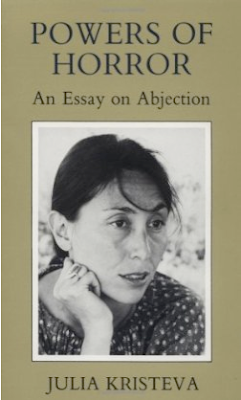
Jiangnan is fundamentally all mud; neither water nor earth, it is the substance that cannot be named. Julia Kristeva frames that which cannot be object (identifiable) as abject. She investigates our simultaneous repulsion and attraction to things like mud, and how the abject is contained culturally. The following abstracts are from Julia Kristeva's Powers of Horror; An Essay on Abjection (1982). That all of Suzhou's cultural motifs are somehow in response to mud seem absurd; yet themes like forgetfulness, exile and jouissance that Powers of Horror articulates register deeply as reoccurring themes that characterize Suzhou's 2,500 years of history.


NEITHER SUBJECT NOR OBJECT
There looms, within abjection, one of those violent, dark revolts of being, directed against a threat that seems to emanate from an exorbitant outside or inside, ejected beyond the scope of the possible, the tolerable, the thinkable...

 The abject is not an ob-ject facing me, which I name or imagine. Nor is it an otherness ceaselessly fleeing in a systematic quest of desire..

Not me. Not that. But not nothing either. A "something" that I do not recognize as a thing. A weight of meanglessness, about which there is nothing insignificant, and which crushes me. On the edge of non-existence and hallucination, of a reality that, if I acknowledge it, annihilates me. There, abject and abjection are my safeguards. The primers of my culture.
[page 1]

THE IMPROPER/UNCLEAN
Loathing an item of food, a piece of filth, waste, or dung. The spasms and vomiting that protects me. The repugnance, the retching that thrusts me to the side and turns me away from defilement, sewage, and muck. The shame of compromise, of being in the middle of treachery. The fascinated start that leads me toward and separates me from them. 

It is thus not lack of cleanliness or health that causes abjection but what disturbs identity, system, order. What does not respect borders, positions, rules. The in-between, the ambiguous, the composite...He who denies morality is not abject; there can be grandeur in amorality and even in crime that flaunts its disrespect for the law - rebellious, liberating, suicidal crime. Abjection, on the other hand, is immoral, sinister, scheming and shady: a terror that dissembles, a hatred that smiles, a passion that uses the body for barter instead of inflaming it, a debtor who sells you up, a friend who stabs you...
[page 2]

AN EXILE WHO ASKS, "WHERE?"
Instead of sounding himself as to his "being," he does so concerning his place: "where am I" instead of "who am I?" For the space that engrosses the deject, the excluded, is never one nor homogeneous, nor totalizable, but essentially divisible, foldable and catastrophic. A deviser of territories, languages, works, the deject never stops demarcating his universe who fluid confines -  for they are constituted of a non-object, the abject - constantly question his solidity and impel him to start afresh. A tireless builder, the deject is in short a stray. He is on a journey, during the night, the end of which keeps receding. He has a sense of the danger, of the loss that the pseudo-object attracting him represents for him, but he cannot help taking the risk at the very moment he sets himself apart. And the more he strays, the more is is saved.
[page 8]

TIME: FORGETFULNESS AND THUNDER
For it is out of such straying on excluded ground hat he draws his jouissance. The abject from which he does not cease separating is for him, in short, a land of oblivion that is constantly remembered. Once upon blotted-out time, the abject must have been a magnetized pole of covetousness. But the ashes of oblivion now serve as a screen and reflect aversion, repugnance. The clean and proper (in the sense of incorporated and incorporable) becomes filthy, the sought-after turns into the banished, fascination into shame. Then, forgotten time crops up suddenly and condenses into a flash of lightning an operation that, if it were thought out, would involve bringing together the two opposite terms but, on account of that flash, is discharged like thunder, of veiled infinity and the moment when revelation bursts forth.
[page 8]

JOUISSANCE AND AFFECT

...abjection is above all ambiguity. Because, while releasing a hold, it does not readically cut off the subject from what treatens it -  on the contrary, abjection acknowledges it to be in perpetual danger. But also because abjection itslef is a composite of judgement and affect, of condemnation and yearning, of signs and drives. Abjection preserves what existed in the archaism of pre-objectal relationship, in the immemorial violence with which a body becomes separated from another body in order to be - maintaining that night in which the outline of the signified thing vanishes and where only the imponderable affect is carried out.
[page 9]

AS ABJECTION - SO THE SACRED
Abjection accompanies all religious structuring and reappears, to be worked out in a new guise, at the time of their collapse.
[page 17]

Julia Kristeva. Powers of Horror; An Essay on Abjection. New York: Columbia University Press, 1982

Sunday, April 11, 2010

Bert Schierbeek; the Gardens of Suzhou


If Marco Polo was the Venetian that first wrote of water and the infrastructure that parts land from water in Jiangnan, Bert Schierbeek may be the first Dutchman to write about the nature of that reclaimed land. In an introduction to his poems, The Gardens of Suzhou, Schierbeek writes, 

They [the gardens of Suzhou] were laid out in harmon with the landscape, or, as the Chinese say, they were 'borrowed from the landscape.' That is, the landscape influences the laying out of the gardens, and the gardens influence and support the landscape...

As the garden architects borrowed from the landscape, so the poets have borrowed from the gardens.


The Pond

in the valley
lies the garden
in the garden
the pond
in the pond
the mountains the trees
the birds
miror themselves
among the fish
the wrikled head
of the wind


fragrance of tea 
three stones 
in a sea
of silver

above the water 
of rippled sand
whistles the wind
deathly still

the ship heading upstream
greets the fish heading downstream

moon slides
across lake of sand
and takes water

current and undercurrent 
an encouter
on a cross-tie

sometimes the light against the sea
sometimes the land against the light
and we in between


o the mountain and singing
up there
and we
down here

so calm the sea
so peaceful but 
below that scum
carries on
and comes up

new things he cried out
to write about
as old as the night
she cried out a buzzard
hovering in the air
swoops down upon
a mouse


said he we're going to 
abolish history and ignorance and suffering 
and we did that
with much ignorance and suffering

an empty shell 
in our hands
filled with ignorance
and with suffering

history was the
only thing we had

like the buzzard
its mouse

from  The Gardens of Suzhou
by Bert Schierbeek, 1985


additional photographs by the author may be accessed at

Friday, April 9, 2010

Marco Polo in Jiangnan


It is told that of the seventeen years Marco Polo spent in China, at least three was spent in Jiangnan. In his fabled account, Il Milione, Marco is careful to note Jiangnan waterways, both as infrastructure and in their phenomenological beauty. He describes the great Yangtze River, the prosperous cities along the Grand Canal, and takes particular delight in detailing the waterways in Hangzhou. Since this Venitian's and the West's first conception of Jiangnan, Jiangnan was a civilization invested in and informed by its hydrology as much as Venice is entwined to its sea.

It [Hangzhou] is situated between a lake of fresh and very clear water on one side, and a river of great magnitude on the other, the waters of which, by a number of canals, large and small, are made to run through every quarter of the city, carrying with them all the filth into the lake, and ultimately to the sea. This, whilst it contributes much to the purity of the air, furnishes a communication by water, in addition to that by land, to all parts of the town; the canals and the streets being of sufficient width to allow of boats on the one, and carriages in the other, conveniently passing, with articles necessary for the consumption of the inhabitants. It is commonly said that the number of bridges of all sizes, amounts to twelve thousand. Those which are thrown over th eprincipal canals and are connected with the main streets, have arches so high, and built with so much skill, that vessels with their masts can pass under them, whilst, at the same time, carts and horses are passing over their heads - so well is the slope from the street adapted to the height of the arch. If they were not in fact so numerous, there would be no convenience crossing from one place to another.

Marco Polo
from Il Milione, 1298

Tuesday, March 23, 2010

Water Spirits of the South

The Songs of the South are a collection of poems from the ancient state of Chu to which Jiangnan belonged. It is the first instance of Chinese literature from the south, and describes an era between the arrival of Confucian hegemony and the extinction of shamanistic culture. Water is richly conceived as the mysterious abode of spirits, agents beyond the control of mortal beings that needed to be found and courted and appeased before their watery domain could be harnessed. 

The third song amongst the Nine Songs (Jiu ge) collected in the Songs of the South, is dedicated to the Goddess of the Xiang River. It is sung by a shaman, paddling his boat in search of a water spirit. The version below was sung in spring, its sister verse being dedicated to autumn. In Songs of the South; An Anthology of Ancient Chinese Poems (1985), David Hawkes writes of the poem;

 "The shaman's love-song as he pursues, through rivers, lakes and wooded islands, a brooding presence which he senses and sometimes believes he can hear, but never, or only in faint, fleeting glimpses, ever sees, evokes for us, with an extraordinary vividness, an ancient, forgotten time in which men loved, even more than they feared, the mysterious world of nature that surrounded them."

The goddess comes not, she holds back shyly.
Who keeps her delaying within the island,
Lady of the lovely eyes and the winning smile?
Skimming the water in my cassia boat,
I bid the Yuan and Xiang still their waves
And the Great River make its stream flow softly.
I look for the goddess, but she does not come yet.
Of whom does she think as she plays her reed-pipes?


North I go, drawn by my flying dragon,
Steering my course to the Dong-ting lake;
My sail is of fig-leaves, melilotus my rigging,
An iris my flag-pole, my banner of orchides.
Gazing at the distant Cen-yang mooring
I waft my magic across the Great River.

I waft my magic, but it does not reach her,
The lady is sad, and sighs for me;
And my tears run down over cheek and chin:
I am chocked with longing for my lady.

My cassia oars and orchid sweep 
Chip all in vain at ice and snow.
I am gathering wild figs in the water!
I am looking for lotuses in the tree-tops!
The wooing is useless if hearts are divided;
The love that is not deep is quickly broken.

The stream runs fast through the stony shallows,
And my fling dragon wings swiftly above it,
The pain is more lasting if loving is faithless:
She broke her tryst; she told me she had not time.

In the morning I race by the bank of the river;
At evening I halt at this north island.
The birds are roosting on the roof-top;
The water laps at the foot of the hall.
I throw my thumb-ring into the river.

I leave my girdle-gem in the bay of the Li.
Pollia I've plucked in the scent-laden islet
To give to the lady in the depth below.
Time once gone cannot be recovered:
I wish I could play here a little longer
.

from Songs of the South.
Translated by David Hawkes